
Fimi Data triggers, orchestrates, verifies, and proves vendor data deletion, so the obligation in your contract becomes a defensible record.
Eight connected parts, in the order the work happens.
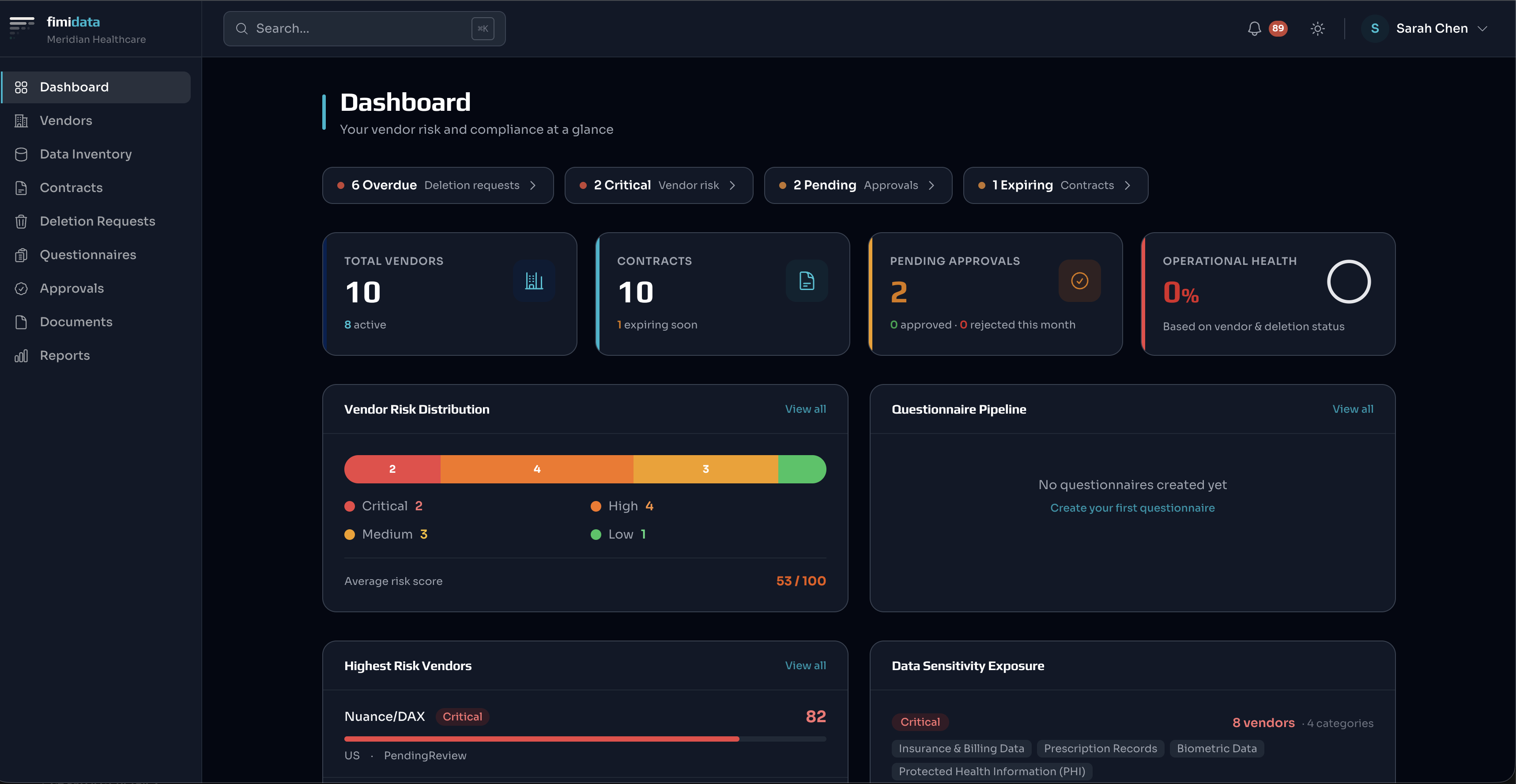
Every third party that has held your data, current and former, in one register.
What each vendor holds, in which systems, and how sensitive it is.
Return-or-destroy clauses, evidence rights, deadlines, and end dates captured as obligations.
The workflow that opens at termination, with owners, due dates, and escalation.
Where the vendor sees its obligations and submits structured evidence.
An immutable record of every action, approval, escalation, and closure decision, with who did it and when.
Exportable records per vendor, per framework, or per audit period.
Open requests, overdue vendors, evidence scores, and exposure across the portfolio.
The workflow starts when the relationship does not.
Every termination gets an owner, a deadline, and a record.
The vendor submits a structured evidence package, not a sentence.
The record exists before anyone asks for it.
It is the first question every buyer asks. Fimi is built around it.
Each request cites the clause the vendor already signed, the evidence it owes, and the deadline it agreed to.
A portal with a clear checklist takes a vendor minutes. Partial submissions are accepted and tracked.
Reminders and escalations run on a schedule you set, to contacts you name, without anyone chasing.
A vendor that will not confirm deletion is documented as exactly that. The finding is yours, and it is defensible.
Every return-or-destroy clause you have signed, tied to the vendor, the data, and the date it comes due.
No offboarding closes without a named person, a completed checklist, and a scored evidence package.
Six elements, present or absent. Weak responses are visible on the dashboard, not filed in an inbox.
Which vendors still hold data, whether deletion occurred, what evidence supports it, and who is accountable.
Every customer is also a vendor. The same record proves to your clients that you deleted theirs.
Not a reconstruction. Not a scramble through old email threads two years after the relationship ended.
Fimi runs as the standing offboarding stage in your vendor lifecycle. Contract end dates trigger the workflow automatically.
Load the relationships that ended in the last 24 months and work the highest-risk data categories first.
An M&A transaction, a divestiture, an audit finding, or a breach at a former vendor. Stand up the record for that population fast.
Fimi sits next to your GRC, contract lifecycle, and procurement systems rather than replacing them. Vendor lists and contract end dates load by import today; integrations are prioritized with customers as they deploy.